Africa does not have a talent problem. It has a proof problem.
What our White Belt students built in Pointe-Noire, and how €349 moves one of them to Yellow Belt.
By Africans. For Africa. With Africa's Friends.



The gap a diploma does not close: moving from claims to tangible proof.
Every year, 10 to 12 million young Africans enter the labor market while only about 3 million formal jobs are created (African Development Bank [AfDB], 2016). A diploma rarely tells an employer what a young person can actually do.
EAI answers with proof: each learner fixes a real local process and documents it on a one-page Mini-A3 (a before/after problem-solving report adapted from the Toyota A3 method; Sobek & Smalley, 2008).
Source: EAI learning management system (LMS) extracts of September 4 and September 24, 2026.
The model: sponsored access, community payback
Most of our students cannot pay for training and certification. An African, or a friend of Africa, sponsors their seat. In return, the student commits to apply the method to a real project in their community: an informal business, a public service, a campus office, a local association. The sponsor funds a person; the community receives an improvement; the student leaves with a certified, verifiable skill.
Sponsor
Funds one certification seat (€349).
Student
Learns online, low bandwidth (special.eclee.africa).
Community
Gets one real local process improved and standardized.
Proof
Mini-A3 + photos + measurements, documented and published.
Five student stories from Pointe-Noire, Republic of the Congo
These students had never heard of process improvement a few months ago. Here is what they did with it, in their own city, with their own hands.
2.3 million views: putting a phone shop on the map
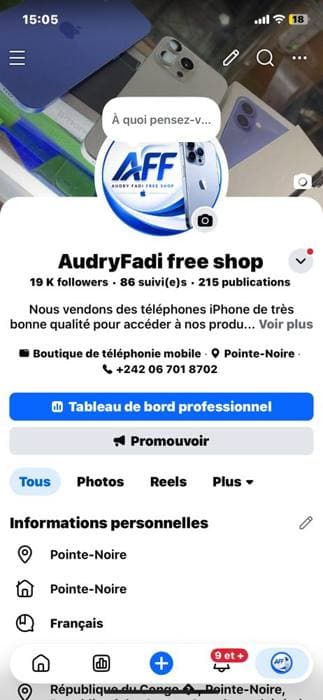
Team: Fina Junior · Where: Audry Fadi Free Shop, revendeur de téléphones mobiles, Grand Marché, Pointe-Noire
The situation. A small phone shop selling mostly through its Facebook page. Posts were irregular and reached few buyers outside its existing circle.
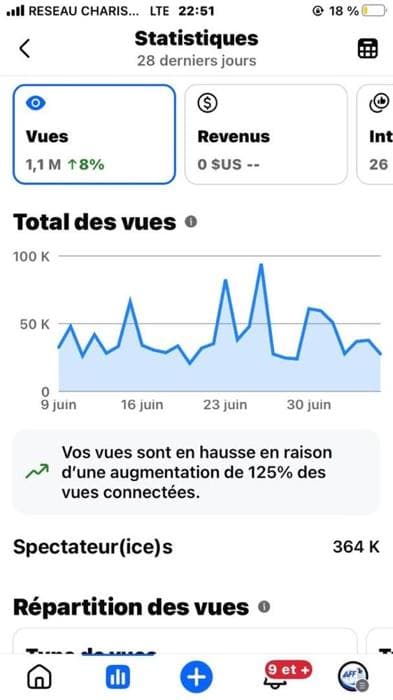
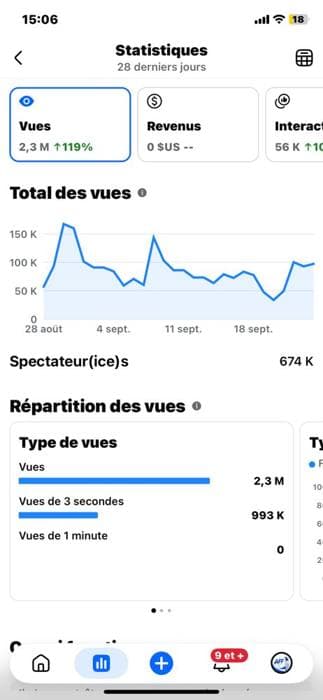
What the students did. Treated the page as a process. The student standardized each post (clear offer, price, trade-in option from Android to iPhone, WhatsApp number, location) and doubled the posting rhythm, then tracked results in the page's own analytics dashboard.
| The evidence | Before | After |
|---|---|---|
| Views per 28 days | 1,1 million | 2,3 millions (+119%) |
| Interactions per 28 days | 26 212 | 56 000 |
| Page followers | 5 200 | 19 000 |
| Publications | 108 | 215 |
Same measurement tool before and after (Meta professional dashboard). Best single post: 88,373 views on September 14, 2026.
Safe Stock: a student team finds the hidden losses of a neighborhood shop
Team: Ghiraldine, Sophie et Mivec · Where: Épicerie Super By, quartier Mbota Carlos, Pointe-Noire
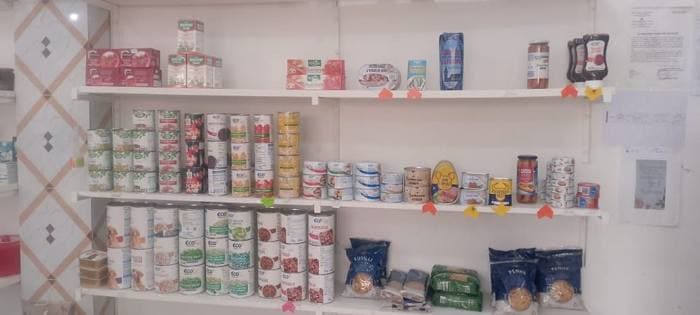
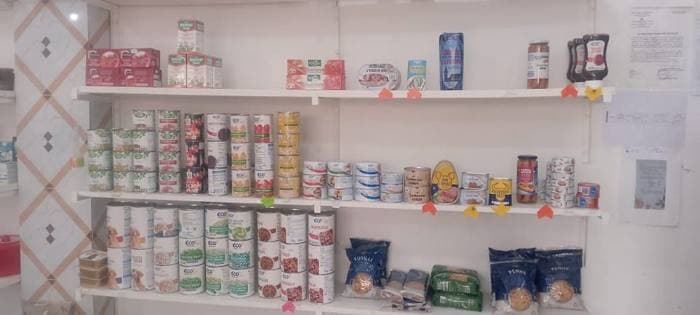
The situation. The owner imports canned food, pasta and biscuits from France. Products sat on shelves for months and nobody knew how many days were left before they expired.
What the students did. On June 18, 2026 the team inventoried the shelves line by line: product, lot, purchase price, selling price, expiry date. They built SafeStock, an Excel dashboard that computes days remaining, flags each line (expired, urgent under 90 days, OK), and shows potential revenue, expected profit and losses. Color-coded tags now mark products on the shelf.
"Every data point must be verifiable." (team charter)



| The evidence | Before | After |
|---|---|---|
| Product lines tracked | 0 | 37 |
| Expired lines found on shelf | unknown | 4 (20 299 FCFA / ~31 €) |
| Products priced below real landed cost | unknown | 9 (jusqu'à 884 FCFA perdus par unité) |
Landed cost = French purchase price converted at fixed rate (655.957 FCFA = €1). According to the team, the owner did not know she was losing money on these items.
Photocopies at DGC: when four students redesign their own university's process
Team: Paul Christian, Stone, Rish et Dorcas · Where: Groupe DGC-Formations (DGC), Pointe-Noire
The situation. Before any course handout could be copied, a class representative had to walk between three offices: academic affairs for a signature, accounting for the paper, then the library for the copy.
What the students did. They mapped the five steps, timed the process for eight days, and ran a 5 Whys analysis. The root cause was not a person but a missing rule: no standing paper allocation existed for the library. They then wrote the fix as standard work: a permanent authorization form for the academic affairs office (DAAC) and a library paper-tracking sheet with an alert threshold.
"The trips between academic affairs, accounting and the library do not produce the photocopy." (team debrief)

| The evidence | Result |
|---|---|
| Baseline, 8 timed days (June 8 to 16, 2026) | 6 min 45 s per request, first 3 steps |
| Root cause identified | No weekly paper allocation procedure |
| Standard work produced | 2 ready-to-sign documents |
The team's target is to halve the waiting and walking time. The after-measurement is being collected with the same stopwatch method.
MOTOUKA: from a frustration to a working delivery prototype
Team: Obtner et Emmanuel · Where: Pointe-Noire, 11 quartiers
The situation. Going to the supermarket across Pointe-Noire takes time and transport money that many families do not have.
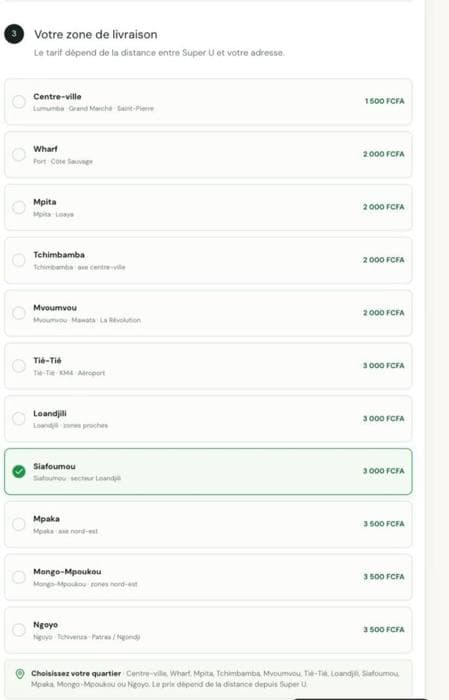
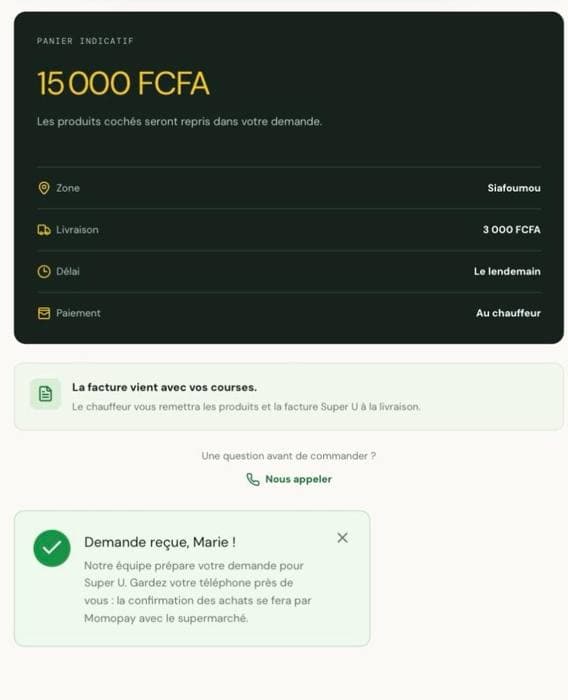
What the students did. The students designed MOTOUKA, a next-day grocery delivery service, and built a working ordering site: customer details, six product categories with indicative prices, delivery fees set by distance for 11 neighborhoods (1,500 to 3,500 FCFA), and automatic order notifications. A full test order was run end to end in September 2026.

| The evidence | Result |
|---|---|
| Delivery zones priced | 11 |
| Product categories online | 6 |
| End-to-end test order | Completed |
This project fits the new EAI Create track (Design Thinking with Business Model Canvas), where the proof is customer evidence and first revenue.
Mémo Numérique: three days to find a past project became two hours
Team: Emilliano · Where: DGC-Formations, filières génie industriel et maintenance
The situation. Past tutored projects (reports, data, supervisor feedback) were scattered on USB keys and e-mails. The student reports that only about 10% of projects since 2023 could still be found.
What the students did. Mapped the waste (waiting, rework, searching office to office) and built a central web archive with search by title, program, year and supervisor, verified student sign-up, and a grading trail per project.
| The evidence | Before | After |
|---|---|---|
| Time to find a past project (pilot users) | 3 days | 2 to 3 hours |
Reported by the student from pilot users. Next cycle target: under 30 seconds with indexing.
Beyond Pointe-Noire: problems our learners chose to tackle
Waiting time on the sugar packaging line, Compagnie Sucrière Sénégalaise
Turnaround time of critical lab results
90-day turnover of frontline staff
Delays in student document processing
Client waiting time
Retail sales below target across outlets
Time lost searching internship documents
Emergency room waiting time before seeing a doctor
Organic juice production process
Identifying inputs in a livestock-feed warehouse
Attendance check-in process
Titles as chosen by learners in their Mini-A3 (LMS extract, September 24, 2026). Work in progress.
Why this works: seeing the frame
"You cannot be in the picture and see the frame at the same time."
Our students live inside these processes every day. The method teaches them to step out, measure honestly, and see the frame. It is the Leadership Diamond (Koestenbaum, 2002) in practice: vision (a better service for their community), reality (measure before acting), ethics (no invented figures, the owner's consent), and courage (students questioning how their own university works).
The ask: €349 moves one student to Yellow Belt
Choose your level of support and see the immediate impact generated.
Every student in these stories asked the same question: "When can I start Yellow Belt?" None of them can pay for it. The Lean Six Sigma Yellow Belt (LSSYB) takes a learner from a first fix to a full structured project using DMAIC (Define, Measure, Analyze, Improve, Control) and data tools such as SIPOC, Pareto charts and cause-and-effect diagrams. It is the level employers recognize as operational.
44 learners are ready now; 106 have completed White Belt.
What a sponsor receives
- The name and background of the student you support.
- Their Yellow Belt project report with before/after measurements and validated Mini-A3.
- A verifiable digital badge you can check and verify online.
- An invitation to the January 2027 talent-pool activation event in the Republic of the Congo, presenting field results to employers, ministries, and funders.
- Public recognition on LinkedIn and impact publications if you wish.
Choose your level of support
Sponsor a Yellow Belt student
Contact Prof. Mahamouda Salouhou directly to choose a student, a team, or a specific sector.
Pr Mahamouda SalouhouFounder
Why €349: a premium certification at a sponsored rate
The ECLEE Lean Six Sigma Yellow Belt is a coached, project-based certification listed at €590 for professionals and organizations. For students and job seekers in Africa, sponsors fund it at a dedicated rate of €349, and each student contributes about 10% (roughly 23,000 FCFA, payable in installments) to show commitment. ECLEE does not discount: access comes through sponsorship, never through markdowns. The badge is issued only after a validated Mini-A3, which sets it apart from exam-only certifications on the market.
How the price compares
| Offer | Price | Real improvement project |
|---|---|---|
| ASQ (American Society for Quality) Yellow Belt exam | 322 $ membre / 422 $ non-membre | No, exam only |
| IASSC (International Association for Six Sigma Certification) Yellow Belt voucher | 289 $ | No, exam only |
| AFNOR Compétences Yellow Belt (12 h e-learning) | 260 € HT | No |
| Lean en Ligne Yellow Belt (autoformation à tutoré) | 179 € à 1 299 € | No, knowledge exam |
| ECLEE Lean Six Sigma Yellow Belt (LSSYB) | 590 € tarif public / 349 € tarif parrainé | Yes: coached project, Mini-A3, verified badge |
Prices as published by each provider, checked September 2026 (AFNOR Compétences, 2026; American Society for Quality, 2026; Lean en Ligne, 2026; TrainingCost.com, 2026). FCFA at the fixed rate 655.957 FCFA = €1: €349 ≈ 229,000 FCFA; three installments of about 76,300 FCFA are possible for families paying part themselves.
About ECLEE
ECLEE (European Center for Leadership and Entrepreneurship Education) is an independent training, education and research institution specializing in curriculum innovation, continuing education and workforce development. Founded in 2005 in Lille, France, it has practiced Lean Six Sigma since 2007 with clients including the European Commission, French ministries, US federal agencies, Honeywell and Boeing. ECLEE is Qualiopi-certified and its certifications are aligned with ASQ standards. EAI is led by Prof. Mahamouda Salouhou, Nelson Mandela Professor of Leadership and Education (2024).
ECLEE's Lean Six Sigma curriculum is grounded in the pedagogical legacy of the former Lean Advancement Initiative (LAI) at MIT (Massachusetts Institute of Technology), a research consortium that brought together MIT, Boeing, Lockheed Martin and the US Department of Defense, among others. It is strengthened by the practitioner legacy of The New Excellence (USA) and the late Professor Russell Coombs, ECLEE's Lead Instructor for Lean Six Sigma from 2007. Since 2007, ECLEE has certified more than a thousand graduate students and professionals across the United States, Asia and Europe.
References
- AFNOR Compétences. (2026). Lean Six Sigma Yellow Belt [Formation CE574].
- African Development Bank. (2016). Jobs for Youth in Africa: Strategy for creating 25 million jobs and increasing inclusive employment in Africa, 2016–2025. AfDB.
- American Society for Quality. (2026). Six Sigma Yellow Belt (CSSYB) certification.
- ECLEE Africa Initiative. (2026). EAI learning management system extracts, September 4 and September 24, 2026 [Unpublished dataset]. ECLEE.
- ECLEE Africa Initiative. (2026). Student team workbooks and Mini-A3 submissions, Pointe-Noire cohort [Unpublished student artifacts]. ECLEE.
- Koestenbaum, P. (2002). Leadership: The inner side of greatness (2nd ed.). Jossey-Bass.
- Lean en Ligne. (2026). Formations certifiantes Lean Six Sigma Yellow Belt.
- Sobek, D. K., II, & Smalley, A. (2008). Understanding A3 thinking: A critical component of Toyota's PDCA management system. Productivity Press.
- TrainingCost.com. (2026). Six Sigma certification cost 2026: ASQ and IASSC exam fees by belt.
Acronyms & Glossary
| LAI | Lean Advancement Initiative (ex-consortium MIT) |
| MIT | Massachusetts Institute of Technology |
| EAI | ECLEE Africa Initiative |
| ECLEE | European Center for Leadership and Entrepreneurship Education |
| LSSWB / LSSYB | Lean Six Sigma White Belt / Yellow Belt |
| LMS | Plateforme d'apprentissage en ligne (special.eclee.africa) |
| Mini-A3 | Rapport de résolution de problème avant/après sur une page |
| DMAIC | Define, Measure, Analyze, Improve, Control |
| SIPOC | Suppliers, Inputs, Process, Outputs, Customers |
| DGC | Groupe DGC-Formations, partenaire d'enseignement à Pointe-Noire |
| DAAC | Direction des Affaires Académiques de DGC |
| FCFA | Franc CFA d'Afrique centrale (655,957 FCFA = 1 €) |
| ASQ | American Society for Quality |
| IASSC | International Association for Six Sigma Certification |
| AFNOR | Association française de normalisation |
| BAD / AfDB | Banque Africaine de Développement (African Development Bank) |
Not ready to sponsor financially today?
Share a field proof on your network, mentor a learner on video, or introduce the initiative to your organization.
Frequently Asked Questions
Can I choose the student or the region?▼
Yes. You can indicate a geographical preference during checkout (Congo, Nigeria, Cameroon, etc.) or contact Prof. Salouhou directly to sponsor a specific learner or team.
How do I know the project is real?▼
Every Mini-A3 project is validated by a local ECLEE Champion, with dated on-site photos, before/after metrics, and logbooks. You receive the complete validated portfolio directly.
Do I receive an invoice or receipt?▼
An official payment confirmation and receipt are automatically delivered via Stripe. Contributions through the Endowment Fund qualify for tax deductible receipts.
Can my company sponsor a full cohort?▼
Absolutely. You can select the 10-student cohort (€3,490), the 44-student cohort (€15,356) or the full cohort of 106 students (€36,994), or contact us to design a tailored cohort in your sector.
What happens if a student drops out?▼
Your contribution is never lost: it is immediately reallocated to the next learner on the waiting list who completed their White Belt, and we inform you transparently.